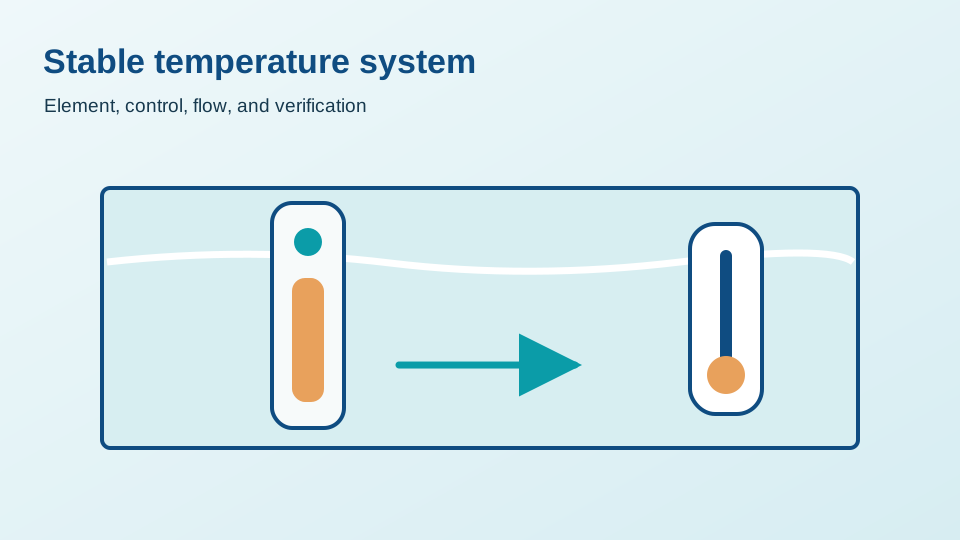
How the control system works
How an Aquarium Heater Generates Heat

Electrical resistance is the basic heating principle. When current passes through a resistive element, electrical energy is converted into thermal energy. The element is sealed inside a protective construction that transfers heat to water while keeping electrical parts isolated. The specific element and housing materials vary among glass, quartz, composite, plastic-protected, and metal or titanium designs.
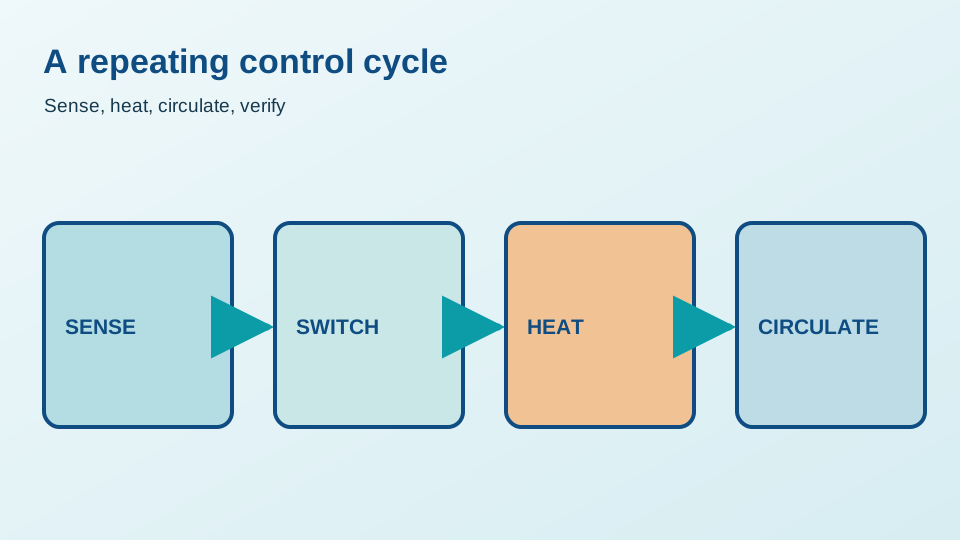
- Power reaches the element when the control calls for heat.
- Electrical resistance produces warmth.
- Heat passes through the protective housing.
- Water touching the housing warms.
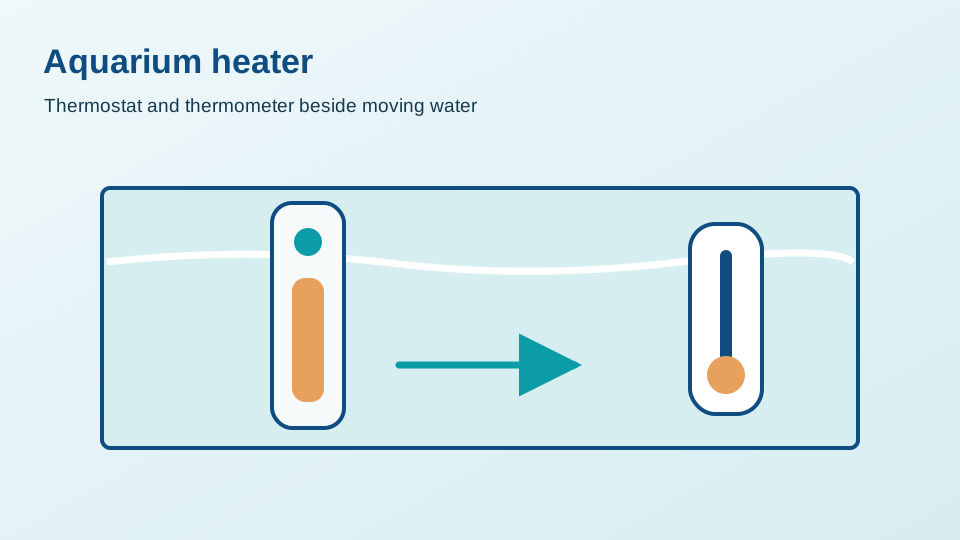
- Moving water carries that warmth away.
Submerged heaters rely on surrounding water to carry heat away. Running a standard submersible model dry, or exposing it during maintenance while energized, can damage equipment and create a hazard. Respect its water-level marking and use the manufacturer's procedure before moving or removing it.
The wattage label describes electrical heating capacity, not the temperature the heater will automatically reach. The controller determines when that capacity is used; room conditions and aquarium heat loss determine how much work it must do.
How the Thermostat Controls Temperature
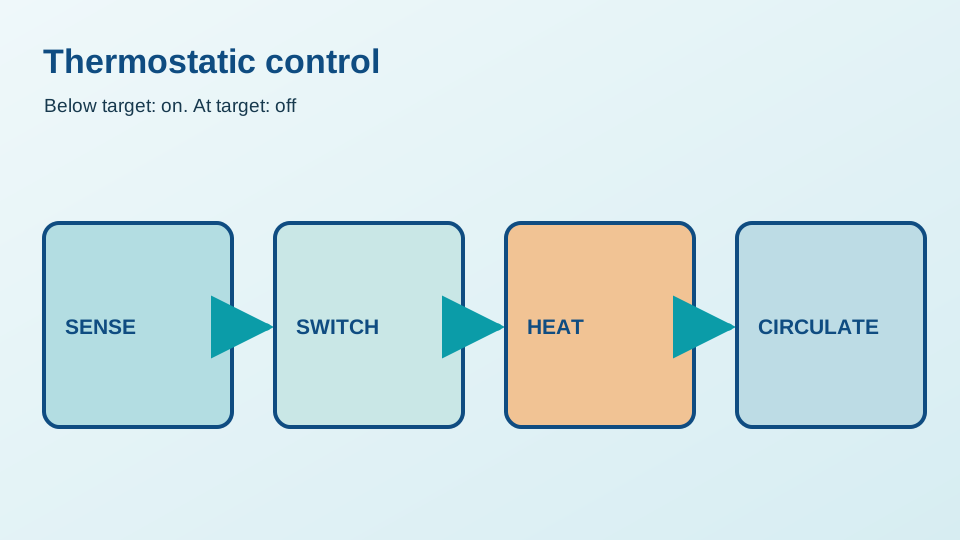
The set point is the temperature selected on an adjustable control or fixed in a preset model. A mechanical thermostat or electronic controller checks sensed water against that target and connects or interrupts power to the element. Different products use different sensing and switching designs; not every heater contains the same mechanical parts.
When the aquarium is too cool
- The sensor detects water below its lower control threshold.
- The controller supplies power to the element.
- An indicator may show active heating.
- Nearby water warms and moves into the tank.
When the target is reached
- The sensor reaches the upper switching threshold.
- Power to the element is interrupted.
- Active heating stops while circulation continues.
- The heater waits until the water cools enough to trigger it again.
This repeated on/off action is thermostatic cycling. It keeps water within a control range rather than pinning every reading to an unchanging number. The exact thresholds and tolerance depend on the model, so a dial marked with one temperature does not prove that every part of the aquarium is exactly there.
Why the Heater Turns On and Off

The aquarium continually exchanges heat with its surroundings. A cooler room, evaporation, replacement water, and night-to-day changes can lower water temperature. The heater replaces some of that lost heat, then switches off once its control detects enough warmth. An indicator light cycling between heating and standby usually reflects that normal regulation.
| Behavior | What it may mean |
|---|---|
| Turns on periodically | The aquarium has lost some heat. |
| Turns off near target | The thermostat has interrupted heating. |
| Cycles several times a day | Normal temperature regulation is possible. |
| Runs almost constantly | Heat loss may be high or capacity insufficient. |
| Never heats while water is cool | Check power, settings, readings, and condition. |
A light alone is not a diagnosis. Compare an independent thermometer over time. If water remains below the chosen target while the heater stays on, review room temperature, wattage, cover, and circulation. If the unit appears inactive, use its manual's safe troubleshooting steps rather than opening or modifying electrical parts.
How Heat Spreads Through the Aquarium

The housing warms nearby water first. As that water moves away, cooler water can reach the heater. Natural convection contributes some mixing, but filter returns and suitable circulation pumps often distribute warmth more reliably. Tank length, hardscape, and heater placement can create areas with different temperatures if flow is weak.
Signs of uneven heat distribution
- Thermometers at opposite ends read noticeably differently.
- The heater sits in a low-flow pocket.
- A long aquarium has only one small moving-water zone.
- Decorations block water around the heater.
- A filter or circulation pump is not operating normally.
Good water movement reduces warm and cool zones without requiring extreme current. Many heater makers recommend a location near useful filter flow, but follow the mounting and clearance directions for the specific product. A heater's sensor can make poor decisions if it measures a pocket of warm water that does not represent the rest of the tank.
Check temperatures after a filter change or a moved return outlet. A heater that seemed adequate in one flow pattern may now warm its own corner faster than the far end.
The Role of the Temperature Sensor
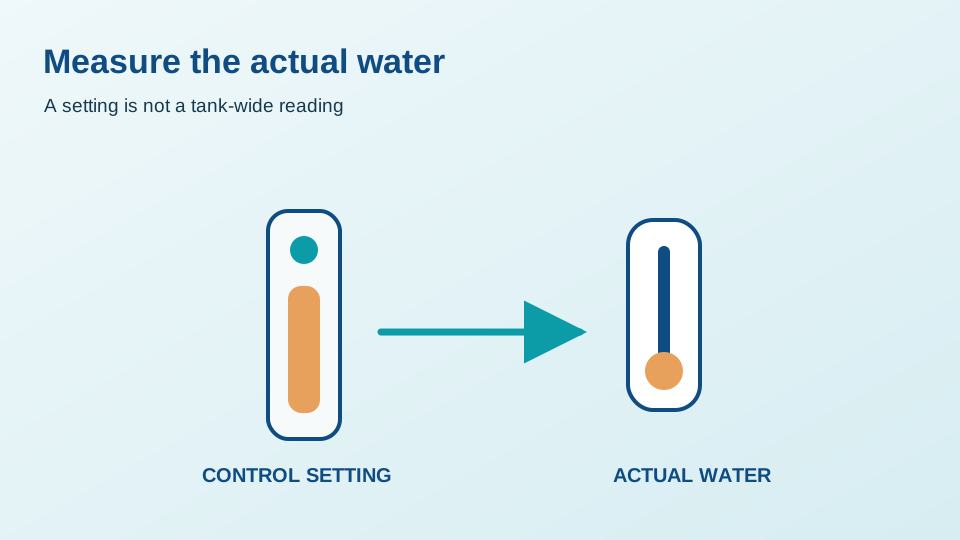
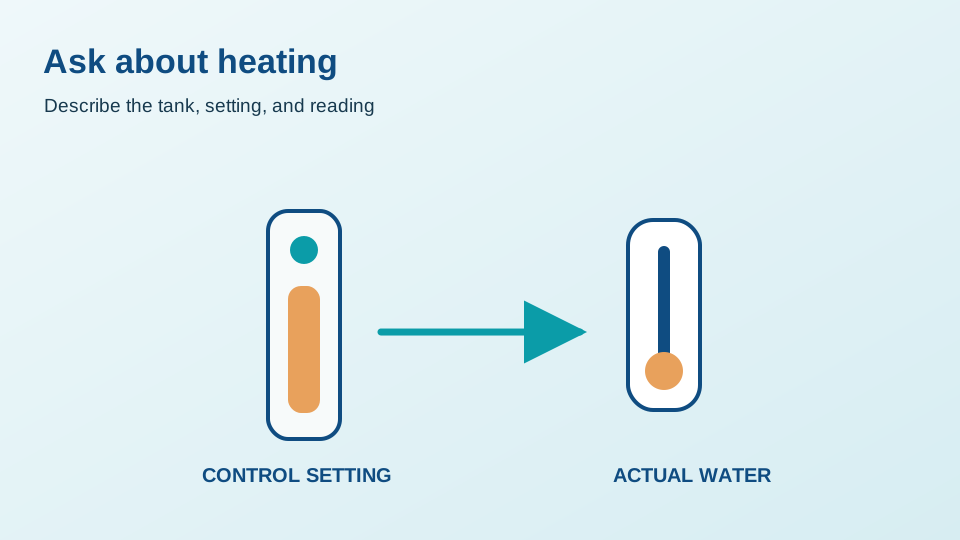
Three numbers can be different: the heater setting, the sensor's local reading, and actual water temperature at another location. An adjustable dial is a control request, not a certified measurement of the whole tank. Sensor position, calibration, room conditions, and water movement all affect the result.
Verify, Do Not Assume
- Set the heater for the livestock's suitable range.
- Allow the aquarium time to stabilize.
- Read a separate thermometer away from the heater.
- Compare readings at consistent times.
- Make small adjustments if needed.
- Follow the manufacturer's calibration instructions.
A sudden large difference between the dial and thermometer is a reason to investigate, not a reason to turn the dial rapidly in the opposite direction. Confirm the thermometer is working, review placement, and check whether the water is circulating normally. Independent measurement gives you evidence about the tank rather than only the heater's intention.
How Much Heating Power Does a Tank Need?

Wattage is the heater's rated electrical power. Tank volume matters, but so does the difference between room temperature and the desired water temperature. An open aquarium in a cold room loses more warmth than a covered aquarium in a stable heated room, even if both contain the same amount of water.
A rough starting range of 3–5 watts per US gallon, or about 1–1.5 watts per liter, appears in aquarium guidance for typical indoor conditions. These are screening estimates, not universal engineering rules. Use the specific manufacturer's chart for aquarium volume and temperature rise, then verify performance in your room.
| Situation | Likely demand |
|---|---|
| Room temperature close to target | Lower |
| Large room-to-water difference | Higher |
| Open top and high evaporation | Higher |
| Covered tank in stable room | Usually lower |
| Larger water volume | Greater total capacity |
| Cold room or seasonal drop | Higher |
An undersized unit may run for long periods without reaching the target. A very large unit still needs trustworthy control and monitoring. Consider exposed surface area, room drafts, seasonal changes, the aquarium's shape, and the animals' appropriate range before choosing a size.
Why Heater Placement Matters

Placement joins sensing to heat distribution. Water needs to move around the housing so it carries heat away and brings the sensor a representative sample. Near a suitable filter outlet or inlet is common, provided the unit's instructions permit it and the flow is not blocked.
Placement matters because
- The thermostat responds to water immediately around its sensor.
- Flow carries newly warmed water through the tank.
- Correct submersion protects the unit.
- Clearance prevents decorations from blocking circulation.
- Approved orientation lets the product work as designed.
Some heaters may be installed vertically or horizontally; others specify one orientation or a minimum water line. Never bury a standard submersible heater in substrate unless it is designed for that purpose. Keep its marked water level within the approved range, including during a water change.
Preset, Adjustable, and Controller-Based Heaters

Products differ in where the target is set and which device switches power. The terminology varies, so read the actual specifications instead of assuming all heaters labeled “automatic” provide the same adjustments or safeguards.
| Type | Temperature control | Typical use |
|---|---|---|
| Preset | Fixed factory target | Simple setups when that target suits the livestock. |
| Adjustable thermostatic | User-selected internal control | Many freshwater and marine aquariums. |
| Element with external controller | Separate probe switches the heater | Systems using independent control or redundancy. |
No category is universally best. A preset value can be unsuitable for animals that need a different range. An adjustable dial is flexible but should still be checked with a thermometer. External controllers add another control point, yet their probes and settings also require correct placement and verification.
Why Stable Temperature Matters to Animals

Fish are ectothermic: the surrounding water strongly influences their body temperature. Temperature affects metabolism, feeding, digestion, activity, and oxygen demand. An animal's acceptable range depends on its species and life stage, so there is no single ideal aquarium temperature for every fish, shrimp, or other inhabitant.
Before setting the heater
- Identify every species in the tank.
- Check reliable temperature guidance for each.
- Find a compatible overlapping range.
- Notice any inhabitant with unusually cool or warm needs.
- Set and independently verify the actual water temperature.
A stable reading at the wrong target is not an achievement. Likewise, a suitable target does little good if a malfunction or large room change makes the water swing far outside it. Match the control plan to the livestock and observe trends instead of reacting to a single small fluctuation.
Why Use a Separate Aquarium Thermometer?
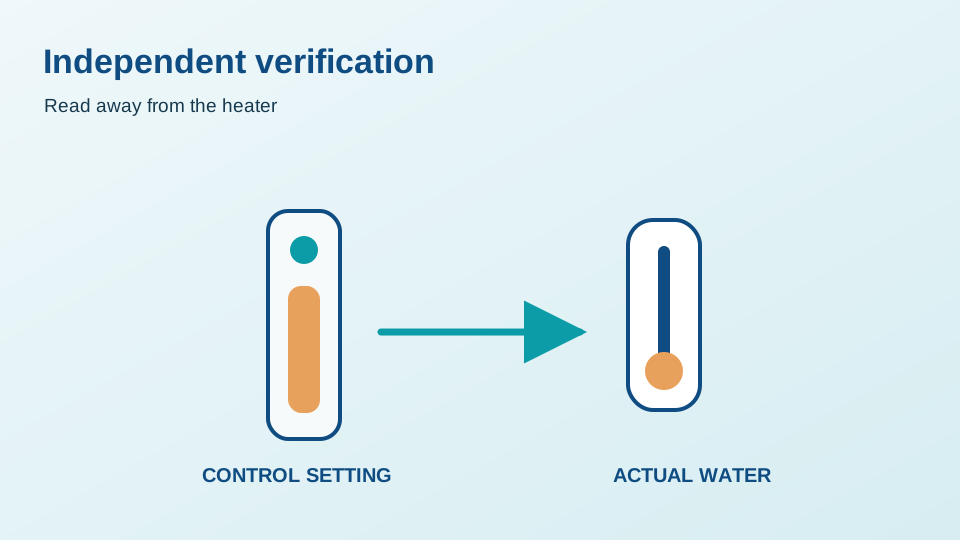
The dial expresses a requested control temperature. It does not independently prove what the aquarium water is doing. Manufacturing tolerance, aging, sensor placement, calibration, and uneven circulation can create a gap between a displayed setting and actual water temperature.
| Device | Primary job |
|---|---|
| Heater | Add heat to the water. |
| Built-in thermostat | Decide when the element heats. |
| Independent thermometer | Show actual water temperature. |
| External controller, if used | Switch equipment based on its own probe. |
Place the thermometer where it measures meaningful aquarium water rather than the heater's immediate warm plume or direct sunlight. In a long tank, checking another location can reveal a flow issue. Record readings at regular times when troubleshooting; a trend is more useful than repeatedly adjusting a dial after every glance.
What Can Make Temperature Fluctuate?
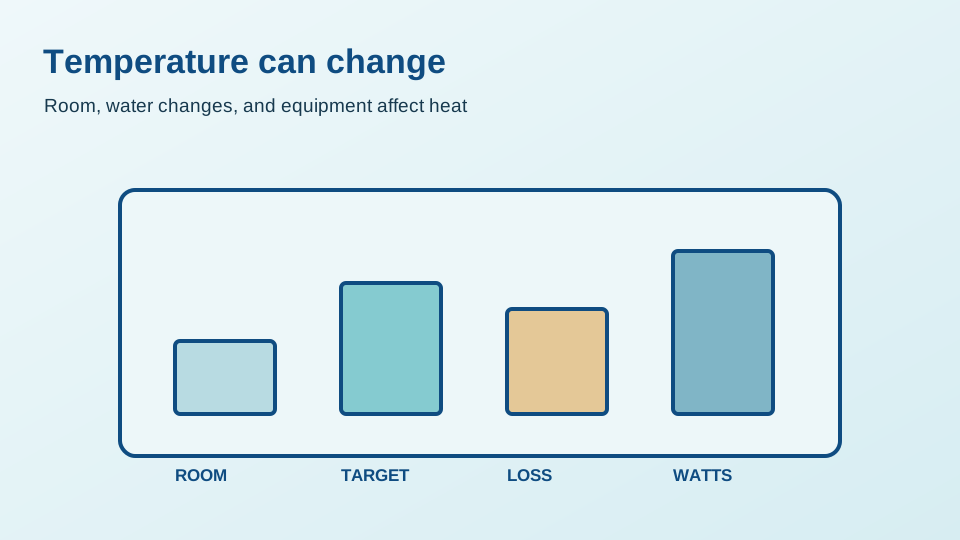
Temperature responds to the whole environment. A cold draft or air conditioner can increase heat loss; direct sun or lighting can add heat. Evaporation, a large water change at a different temperature, a stopped filter, and changed heater settings can alter the pattern too.
| Symptom | Possible explanation |
|---|---|
| Slow overnight fall | Cooler room or insufficient capacity. |
| Different ends, different readings | Circulation or placement issue. |
| Long heating periods | High heat loss, low wattage, or bad measurement. |
| Dial and thermometer disagree | Calibration or sensor-location difference. |
| Rises while heater is off | Room heat, sun, lights, pumps, or another source. |
These are possibilities, not proof of one fault. Check room temperature, water circulation, an independent thermometer, recent maintenance, and the heater's indicator pattern together. Avoid opening or attempting to repair a sealed electrical heater while diagnosing a temperature problem.
Aquarium Heater Safety and Reliability

Use a heater rated for the aquarium and install it exactly as its maker directs. Respect minimum and maximum water-level markings and approved mounting orientation. A standard submersible heater should not be operated dry. Before maintenance exposes or removes it, disconnect it and allow it to cool according to the product instructions.
Aquarium Heater Safety Checklist
- Confirm the product's intended water volume and environment.
- Keep water at the required marked level.
- Leave room for water to circulate around the housing.
- Use a drip loop on the electrical cord.
- Disconnect and cool the heater before removal.
- Inspect for cracks, damaged cords, or other visible wear.
- Verify water temperature with a separate thermometer.
- Follow the manufacturer for cleaning and adjustment.
Some modern products add dry-running or overheat protection, but these features differ. Do not assume a safeguard is present unless the manual says so, and never bypass, dismantle, or modify a heater to test it. Visible damage is a reason to stop using it and follow the manufacturer's replacement guidance.
Can One Aquarium Use Two Heaters?
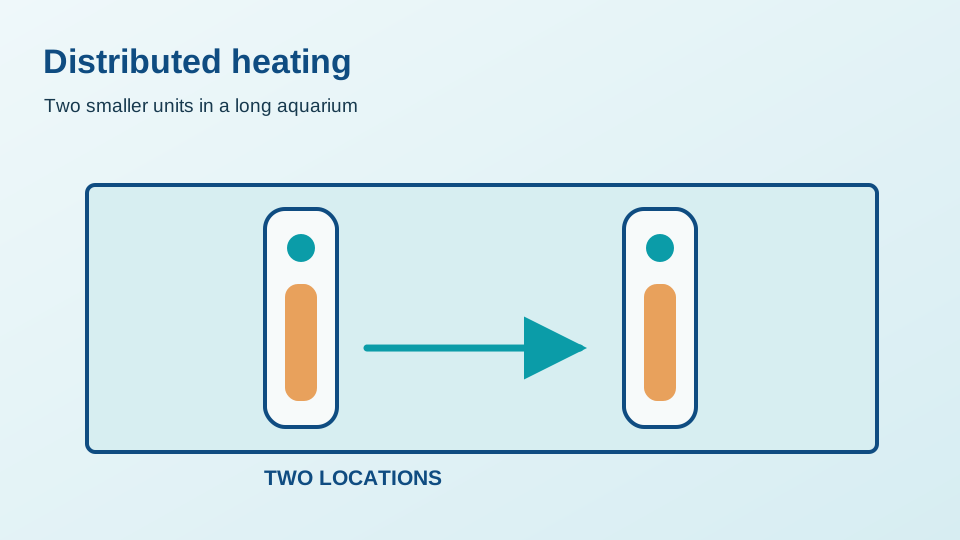
Yes. Some keepers divide total heating capacity between two lower-wattage heaters in a long or large aquarium. This can spread heat across locations and may leave some heating available if one unit stops. It does not guarantee protection against overheating or every possible failure.
Reasons to consider two units
- Different ends of a long tank need good heat distribution.
- Total required capacity can be divided between locations.
- One unit may provide partial backup if another fails.
Both devices still need correct placement, sizing, and monitoring. An independent thermometer remains necessary, and an external temperature controller is another option some experienced keepers use for added control. Confirm compatibility with the heater and controller instructions rather than assuming any combination is safe.
What an Aquarium Heater Cannot Do

- It cannot actively cool water above its target.
- An undersized unit cannot overcome unlimited heat loss.
- It cannot ensure the same temperature everywhere without circulation.
- It cannot choose a suitable target for every species automatically.
- Its dial does not replace an independent thermometer.
- It does not make ongoing temperature checks unnecessary.
When the room becomes warmer than the target, a conventional heater simply stops adding heat. Sun, lights, pumps, or hot indoor air may still warm the aquarium. Cooling requires a different strategy suited to the setup, not a lower heater setting alone.
These limits are why the heater should be considered one part of temperature management. Its task is to add controlled warmth when the water is cool; the room, water movement, livestock requirements, and measurement complete the picture.
A Simple Example of the Heating Cycle
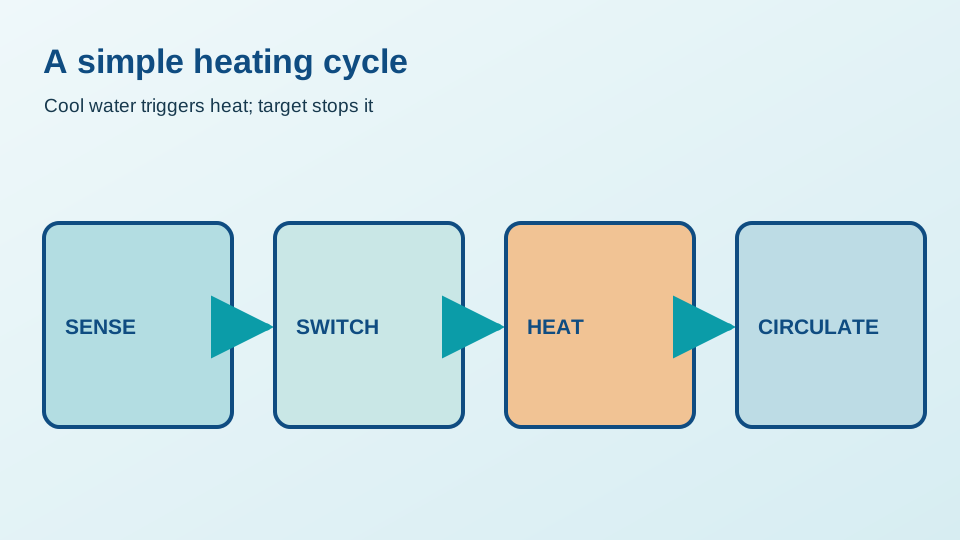
Suppose a keeper selects 78°F, approximately 25.5°C, as a suitable target for the animals in one tank. The following sequence illustrates control; it does not state the exact switching points of every heater.
- The aquarium slowly loses warmth to a cooler room.
- Water near the sensor falls below its lower threshold.
- The thermostat powers the heating element.
- The housing warms surrounding water.
- Filter flow carries warmer water across the tank.
- The sensor reaches its upper threshold and cuts power.
- Water gradually loses heat again; the cycle repeats.
A separate thermometer checks how the whole system performs over time. If the actual tank remains too cool, investigate capacity and heat loss. If opposite ends differ, examine circulation. Each part of the sequence points to a different practical check.